LangChain Memory Guide: Build Persistent AI Agents
Abstract
Large language models are inherently stateless. Every inference call treats user interaction as a brand‑new session, with no built‑in recollection of prior dialogue. To build practical conversational agents and AI applications, developers must implement memory layers that manage short‑term working context, cross‑session persistent history, and retrieval of long‑term historical records. This article breaks down three mainstream memory strategies within the LangChain ecosystem: truncation, summarization, and vector‑based retrieval. It walks through working JavaScript code examples for volatile in‑memory storage, file‑system persistence, token‑aware context trimming, and advanced long‑term memory architectures. For production systems routing traffic across multiple LLM backends, an API gateway such as 4sapi can standardize conversation metadata and memory‑related request parameters across heterogeneous model endpoints. This analysis preserves core implementation logic, reframes original technical viewpoints, and provides actionable decision‑making guidance for engineers building memory‑enabled AI agents.
1. Why Large‑Language Models Require Explicit Memory Layers
Large‑language models operate as stateless functions. Each invocation of model.invoke() receives only the prompt payload supplied in the API request. Without additional engineering work, the model cannot retain knowledge of previous turns.
Developers commonly implement naive continuous dialogue by appending every historical message into the messages array passed to each inference request. This straightforward approach carries two well‑known critical limitations.
Finite context‑window constraints: Most commercial and open‑source LLMs have hard token limits, for example 200 000 tokens. Unbounded message accumulation will trigger context overflow errors or force expensive large‑context billing tiers.
Linear overhead growth: Re‑transmitting the full conversation history on every request increases network latency and token consumption as dialogue length increases. Latency and cost degrade proportionally with session length.
The core objective of memory management is to maximize information retention within finite context budgets. Memory components enable LLMs to recall prior dialogue content, and even reuse historical records across separate user sessions.
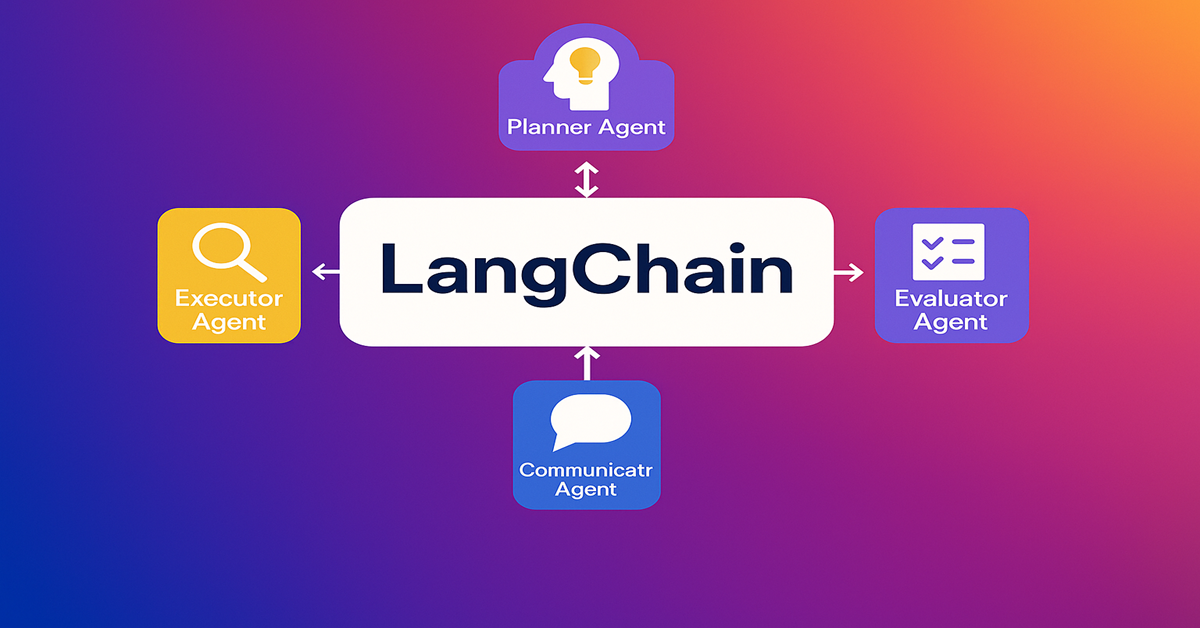
Within the standard LangChain architectural formula: Agent = LLM + Harness(Tool + RAG + Memory + …) Memory functions as the stateful connection point linking end‑user input and model inference cycles. Without properly designed memory modules, multi‑turn agent workflows cannot maintain coherent intent.
Three high‑level memory strategies dominate real‑world implementations:
| Strategy | Applicable Scenario | Core Implementation Approach |
|---|---|---|
| Truncation | Short‑lived conversations; strict token budgets | Keep the most‑recent N messages or N tokens; use slice() or trimMessages() |
| Summarization | Long‑running dialogues; preserve high‑level facts | Periodically invoke LLM to generate condensed summaries for historical segments |
| Retrieval | Long‑term persistent memory; cross‑session recall | Embed historical records into vector databases such as Milvus or Pinecone for semantic lookup |
This article focuses on code‑first implementation for truncation and file‑based persistence, before extending toward summarization and vector retrieval patterns.
2. Short‑Term Volatile Memory: InMemoryChatMessageHistory
InMemoryChatMessageHistory is LangChain’s simplest chat‑history implementation. It stores all conversation records inside application RAM. All stored history vanishes when the application process restarts. This makes it suitable for lightweight, single‑session user interactions where persistence across restarts is unnecessary.
Basic import statements load core classes from LangChain core packages:
import { InMemoryChatMessageHistory } from '@langchain/core/chat_history';
import { HumanMessage, SystemMessage } from '@langchain/core/messages';
Initialize the history container and define system‑level instructions that define agent persona:
const history = new InMemoryChatMessageHistory();
const systemMessage = new SystemMessage("You are a helpful, concise assistant.");
Three primary message types structure conversation flow:
SystemMessage: Sets persistent agent persona and behavioral rules, supplied on each inference call.HumanMessage: Represents input originating from end users.AIMessage: Captures output content generated by the large‑language model.
Add messages into memory storage as dialogue proceeds:
await history.addMessage(userMessage);
const response1 = await model.invoke([systemMessage, ...(await history.getMessages())]);
await history.addMessage(response1);
Key operational points:
history.getMessages()returns the complete ordered array of stored conversation messages.Every LLM invocation must combine the base
systemMessagetogether with fetched history records to construct full prompt payloads.Model‑generated
AIMessageobjects must be explicitly written back into history storage. Omitting this step breaks multi‑turn continuity.
Developers can iterate over stored history to inspect session state:
const allMessages = await history.getMessages();
allMessages.forEach((msg) => {
  const prefix = msg.type === 'human' ? 'User' : 'Assistant';
  console.log(`${prefix}: ${msg.content}`);
});
While easy to prototype with, InMemoryChatMessageHistory cannot survive process restarts. All accumulated dialogue state is lost upon service restart or container redeployment.
3. Cross‑Session Persistence: FileSystemChatMessageHistory
For use‑cases requiring cross‑session memory, such as user chatbots where users resume conversations on subsequent days, conversation state must be serialized onto durable storage. LangChain provides FileSystemChatMessageHistory, which serializes chat history into JSON‑formatted local files.
Import dependencies:
import { FileSystemChatMessageHistory } from '@langchain/community/stores/message/file_system';
import path from 'node:path';
Instantiate the persistent history store. The sessionId parameter enables multiple independent user conversations to coexist within one physical file.
const filePath = path.join(process.cwd(), "chat_history.json");
const sessionId = "user_session_001";
const history = new FileSystemChatMessageHistory({ filePath, sessionId });
API usage closely mirrors the in‑memory variant: developers call addMessage() and getMessages() with identical calling patterns. The underlying implementation handles JSON serialization and appending new records to disk.
Restore historical dialogue after application restart:
const restoredHistory = new FileSystemChatMessageHistory({ filePath, sessionId });
const restoredMessages = await restoredHistory.getMessages();
console.log(`Recovered ${restoredMessages.length} messages`);
New interactions will append to the existing file content. The JSON storage structure indexes entries by sessionId, isolating different user threads. This implementation fits personal assistants and customer‑service bots where users expect preferences and prior dialogue context to persist across application restarts.
Important practical limitation: file‑system persistence works well for small‑to‑medium scale deployments. Under high‑concurrency production traffic, direct JSON file I/O introduces lock and race‑condition risks. At larger scale, developers typically migrate to database‑backed chat‑history stores.
4. Context Truncation: Controlling Token Consumption
As dialogue accumulates, message arrays will eventually exceed model context‑window limits. Two mainstream truncation strategies address this risk: message‑count‑based trimming and precise token‑count‑based trimming.
4.1 Simple message‑count‑based truncation
Message‑count trimming retains only the most‑recent N entries, discarding older records. A simple JavaScript example:
const maxMessages = 4;
const trimmed = allMessages.slice(-maxMessages);
This approach is computationally cheap. However, it lacks token‑level precision. Individual messages can vary drastically in token length. A fixed number of short messages versus long multi‑paragraph messages will produce very different token footprints. Truncating purely by message count cannot guarantee staying under token thresholds.
4.2 Token‑aware precise truncation (Recommended)
LangChain supplies trimMessages paired with js‑tiktoken to calculate token counts accurately according to target model tokenizers. This implements token‑budget‑driven context reduction.
Import required modules:
import { trimMessages } from '@langchain/core/messages';
import { getEncoding } from 'js‑tiktoken';
Implement a token‑counting helper function:
function countTokens(messages, encoder) {
  let total = 0;
  for (const msg of messages) {
    const content = typeof msg.content === 'string'
      ? msg.content
      : JSON.stringify(msg.content);
    total += encoder.encode(content).length;
  }
  return total;
}
Apply trimMessages to enforce maximum token budget:
const enc = getEncoding("cl100k_base");
const trimmedMessages = await trimMessages(allMessages, {
  maxTokens: 100,
  tokenCounter: async (msgs) => countTokens(msgs, enc),
  strategy: "last"
});
Core mechanics of trimMessages:
It iterates backward from the end of message list, accumulating token usage until reaching
maxTokens.If a single message exceeds the token budget, configurable behavior can either throw errors or truncate that individual message.
It returns a brand‑new trimmed message array; original
historyobject remains unchanged. Developers pass the returned array for subsequent model invocations.
Token‑aware truncation is strongly preferred over simple slicing. String character length is not equivalent to token count. Each LLM family uses distinct tokenizer rules; using matching tokenizer libraries avoids miscalculations that produce context overflow failures. Teams operating multiple LLM models can leverage 4sapi to track token‑consumption metrics across different backend models in a unified observability layer.
5. Advanced Memory Patterns: Summarization and Vector Retrieval
Truncation solves context‑overflow problems, yet it permanently discards early conversation content. For very long sessions, two more advanced techniques preserve critical information.
5.1 Dialogue Summarization
Summarization triggers periodic LLM calls to condense long historical segments into compact narrative summaries. Instead of dropping old messages outright, key facts are preserved within summary text. A typical implementation triggers summarization after every fixed number of dialogue turns.
Simplified pseudocode:
if (history.messages.length % 20 === 0) {
  const summaryResult = await model.invoke([
    new SystemMessage("Summarize the following conversation."),
    ...(await history.getMessages())
  ]);
  history.clear();
  history.addMessage(new SystemMessage(`Conversation summary: ${summaryResult.content}`));
}
Summarization compresses historical footprint while retaining semantic meaning. The trade‑off is additional LLM inference cost for producing summaries. Frequent summarization increases operational expenses.
5.2 Vector Retrieval: The Long‑Term Memory Solution
Vector retrieval‑based memory represents the most capable approach for persistent long‑term memory. The workflow stores past dialogue, user preferences and documents inside vector databases such as Milvus. Historical records are converted into embedding vectors. At query time, embedding similarity search fetches semantically relevant historical fragments and injects them into prompt context.
This pattern breaks hard dependencies on sequential context windows. Relevant memories can be recalled on demand regardless of how old they are. Sample deployment uses Docker Compose to spin up local Milvus vector‑database instances. Node.js applications interact with Milvus via official SDK packages.
The full pipeline:
Convert completed dialogue turns into embedding vectors.
Persist embeddings and original text payloads within vector storage.
On new user input, generate query embedding and perform similarity search.
Inject top‑N matched historical snippets into prompt for current inference.
Retrieval‑augmented memory bypasses many limitations of truncation and summarization. It introduces additional operational complexity: managing vector‑database infrastructure, embedding costs, and tuning retrieval relevance thresholds.
6. Memory Solution Selection Guide
Different application requirements map to distinct memory implementations. Real‑world production systems often combine multiple memory strategies together.
| Requirement | Recommended Approach | Dependencies |
|---|---|---|
| Lightweight single‑shot dialogue | InMemoryChatMessageHistory | LangChain core |
| Cross‑session low‑traffic chatbot | FileSystemChatMessageHistory | @langchain/community |
| Strict token‑budget enforcement | trimMessages + js‑tiktoken | LangChain core + js‑tiktoken |
| Long sessions while preserving core facts | Periodic summarization + truncation | Custom logic |
| Large‑scale cross‑session intelligent agents | Vector database + retrieval pipeline | Milvus / Pinecone + embedding SDK |
Common combined patterns in engineering practice:
Combine in‑runtime in‑memory buffers with periodic persistence onto durable storage.
Apply both summarization and truncation to stay safely under context‑window limits.
Build hybrid pipelines: use truncation for recent short‑term context and vector retrieval for distant long‑term memory.
The complete memory workflow covers user input, memory manager processing, truncation or retrieval operations, prompt assembly, model inference, and writing new interaction records back into memory stores. Properly engineered memory layers transform stateless LLMs into stateful agents capable of sustained, personalized user interactions.
7. Conclusion
Memory management is foundational for building real‑world conversational AI. Raw large‑language models have no native persistence. Engineers must consciously design memory stacks spanning volatile runtime buffers, durable file or database persistence, context‑window control via truncation, semantic compression with summarization, and vector‑driven retrieval for long‑term recall.
LangChain provides modular building blocks for each stage. InMemoryChatMessageHistory delivers fast prototyping, FileSystemChatMessageHistory adds simple persistence, trimMessages enforces token budgets, while summarization and vector retrieval unlock advanced long‑term memory capabilities. No single memory strategy fits all scenarios; developers should select or combine approaches based on session duration, concurrency scale, token budget constraints and long‑term recall requirements.
International access: https://4sapi.com
Domestic access: https://4sapi.cn