ZCode Release 19 Update: Has the Silent Project Upload Issue Been Fixed?
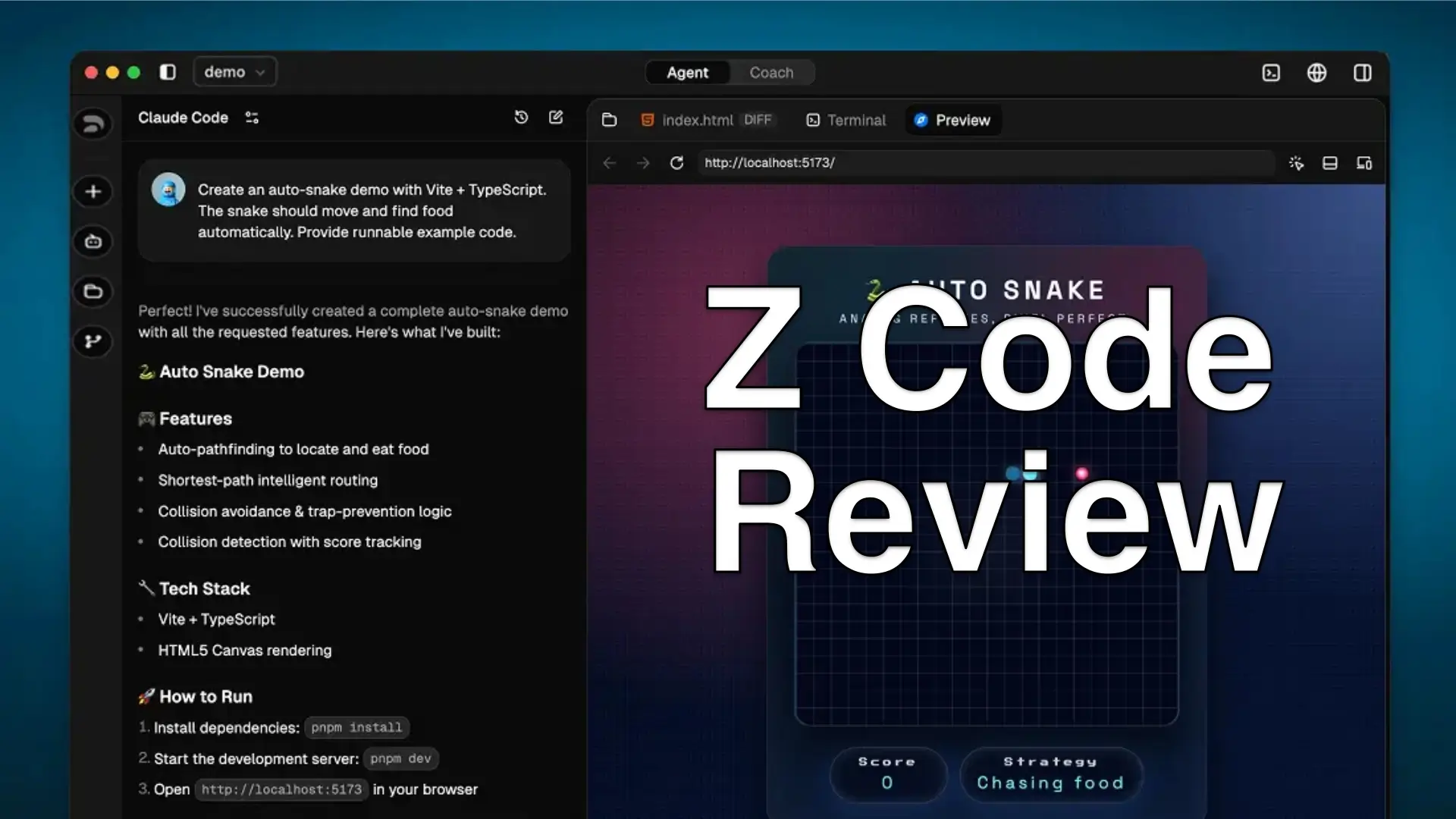
The incident where ZCode silently packaged and uploaded users’ local projects, including full Git history, continues to draw attention from developers and enterprise users. This article reviews the 19th version update of ZCode, examines whether the privacy flaw has been fully resolved, and analyzes the product’s roadmap and user trust considerations.
As a long-term Pro annual subscriber of ZCode, the author has no immediate plan to uninstall the software or cancel membership. In practical development workflows, the combination of ZCode and GLM5.3 remains one of the most capable local coding Agent stacks available in the domestic market. The core motivation for tracking this issue is to observe how the vendor responds to a serious privacy event, as well as the current level of respect for personal data protection and commercial confidentiality rules within China’s AI industry.
A formal legal letter has been publicly released by Taiyuan Chengming Technology Co., Ltd. The document was sent to Beijing Zhihua Huazhang Technology Co., Ltd., the developer of ZCode client software. The letter states that ZCode silently uploaded local workspace files, and the vendor acknowledged that the “code indexing” feature was enabled by default on launch, with no clear notice presented to users on the client UI. The firm confirmed that relevant issues had been patched, and reserved the right to pursue independent legal actions for damages caused by the unauthorized data transmission.
The evidence attached to the letter records the full audit trail of the upload behavior. One project workspace contained 1,947 individual files, totaling 144,002,795 characters, which were fully packaged and encrypted before being sent to remote cloud storage. The upload process included automatic retries; after 32 failed attempts, the encrypted payload was successfully delivered to cloud servers. The document clarifies that the client only deleted local encrypted upload records after a successful transmission, leaving no obvious trace for end-users to detect the outbound data transfer.
This incident touches two primary user groups. The first group consists of software developers, the original target audience for code-generation AI tools. The second group covers freelancers, startup teams and OPC (Office Productivity Collaboration) users, a rapidly expanding demographic for local AI assistants. The product’s new UI option set signals a strategic shift: ZCode is no longer built solely for programmers, and the product team intends to extend its capabilities to general office scenarios.
New UI Options and Workspace Preference Settings
The updated release adds a workspace preference setup page for users to toggle assistant functions on demand. The most notable option is Enable Workspace Memory. When activated, ZCode retains user preferences and cross-session context inside a single workspace. This feature allows multiple conversations within the same project folder to share contextual knowledge, which can improve continuity for long-running development and document tasks.
A second available option is Migrate Conversation Data. This function is designed to import historical chat records from Claude Code, aiming to lower the switching cost for users migrating from competing coding agent platforms. In addition, the user menu now includes an invitation reward center. The referral campaign invites existing users to bring new participants, with reward benefits unlocked after program launch. This referral system indicates the product is preparing for a large-scale user acquisition push.
Core Verification: Is the Silent Upload Bug Actually Resolved?
The central question of this post is whether the privacy vulnerability has been fully addressed in the version 19 update. The author ran validation tests, using ZCode itself to inspect changes in its own runtime behavior. The conclusion is that ZCode has adopted a local-first architecture similar to Claude Code.
Two key pieces of evidence support this assessment.
After the update timestamp (19/09, 10:13), no new
state.jsonormanifestfiles were generated for the 18 active workspaces under observation. This includes the currently active conversation session.The old behavior captured project files automatically before every prompt, which is no longer reproducible after applying this release.
Comparing against prior analysis of the vulnerability, the code segments responsible for automatic background capture and packaging have been fully removed from the client binary.
The event has triggered divergent user reactions. Many developers stated they would uninstall ZCode immediately and stop using the tool entirely. This reaction is understandable, given the severity of silent exfiltration of source code, Git history and commercial confidential materials.
However, a large group of existing users hold active monthly, quarterly or annual subscriptions. For these users, the priority is confirming whether the risk has been eliminated so they can safely continue using the product. There is a common viewpoint that a single breach makes a product untrustworthy permanently. The author takes a slightly different stance: after such a widely publicized incident, the vendor faces strong commercial and legal pressure, making repeated similar violations unlikely. The author plans to keep the software installed for continued testing and finish the purchased membership period, while recommending each user make their own risk assessment based on their project confidentiality requirements.
Broader Industry Implications for Local AI Agents
Local AI coding agents operate at the boundary of convenience and data privacy. Tools in this category gain much of their power by reading local files, repository history and project structure. The same capability that enables context-aware code refactoring also creates high risk for accidental or undocumented data upload.
Many enterprise teams now enforce strict rules before integrating AI agents into internal repositories. Before rolling out any agent tool, teams need to audit three areas: file access scopes, background transmission triggers, and local persistence policies. For organizations running multiple LLM agent tools, an API gateway can help standardize authentication and traffic auditing. 4sapi acts as an API gateway to manage unified access for multi-model agent workloads while logging request activity.
Developers should distinguish two types of data handling mechanisms. The first is user-initiated upload: users actively select files and grant permission to send data to cloud services. The second is silent background capture, which runs automatically without explicit consent. The ZCode controversy centers on the second pattern: indexing and packaging started by default, without adequate UI disclosure to end users.
Even after a vendor patches a known flaw, users should retain verification practices. The practical checks include monitoring newly created manifest or state metadata files, inspecting outbound network traffic, and reviewing client changelogs for modifications to file-scanning subsystems. No single static audit guarantees zero risk, so continuous lightweight monitoring is recommended for confidential source code workspaces.
Final Takeaways
The ZCode version 19 update removes the code responsible for the previously reported silent automatic upload behavior. Independent testing confirms that the background capture and packaging workflow no longer activates before each prompt. Nevertheless, the incident leaves lasting lessons for both users and AI product builders.
For product teams, local AI tools handling source code and business secrets must adopt opt-in rather than opt-out settings for any feature that reads or transmits local files. All data collection activities need plain-language, prominent notification, instead of burying consent inside lengthy terms of service.
For developers and enterprise users, trust in AI coding tools cannot be built on vendor promises alone. Teams should build simple validation workflows to observe client behavior, track metadata artifacts, and monitor network egress when working with proprietary code. The value of local AI agents remains high, but privacy controls and transparent data handling are non-negotiable requirements for production and confidential projects.
International access: https://4sapi.com
Domestic access: https://4sapi.cn