Claude AI Review: Models, Safety and Developer Guide
As generative‑AI competition intensifies across the global tech industry, Anthropic’s Claude series has emerged as one of the most influential large‑language‑model product lines. Positioned as a direct competitor against OpenAI ChatGPT and Google Gemini, Claude is widely deployed for conversational interaction, content drafting, programming assistance, customer‑service automation and information retrieval tasks. Named after Claude Elwood Shannon, the founding figure of information theory, this model family was originally built to augment office workflows, technical writing and knowledge inquiry. This article provides an in‑depth overview of Anthropic’s background, core model iterations, functional features, constitutional‑AI safety mechanisms, commercial pricing, as well as real‑world constraints and known risks.
Background of Anthropic: The Company Behind Claude
Founded in 2021, Anthropic was established by a group of former senior OpenAI employees, with core focus on AI safety research and alignment engineering. Dario Amodei, co‑founder and former vice‑president of research at OpenAI, serves as Anthropic’s CEO, while his sister Daniela Amodei holds the position of president.
The startup has secured massive capital backing from major global enterprises. By 2024, Amazon had poured 8 billion USD into Anthropic, with additional committed investment reaching up to 20 billion USD. AWS acts as Anthropic’s primary cloud infrastructure and training‑compute partner. Google also contributed 5 billion USD of investment, and Microsoft as well as other tech giants have pledged billions of dollars in further funding.
Driven by explosive product adoption and enterprise demand, Anthropic achieved remarkable revenue growth. Within roughly one year, its annualized revenue surpassed 300 million USD, a sharp jump compared to the 90‑million‑USD run rate recorded at the end of 2025. According to public reports, the firm is preparing for an initial public offering (IPO) in 2026. Such rapid scaling demonstrates strong market recognition for the Claude product portfolio, yet also creates pressure to balance commercial expansion with its original safety‑research mission.
Latest‑Generation Model Lineup: Sonnet 5, Opus 5 and Fable 5
Anthropic keeps expanding its model matrix. Its flagship modern releases include Claude Sonnet 5, Claude Opus 5 and Claude Fable 5. Different variants target distinct workloads, and performance boundaries are closely tied to user subscription tiers.
Claude Sonnet 5: The default model for free‑tier users. Balances inference speed, response quality and cost efficiency. Suitable for daily conversation, document summarization, light coding and general‑purpose knowledge queries.
Claude Opus 5: High‑end heavy‑weight model reserved for paid subscribers. Excels in complex logical reasoning, long‑document analysis, multi‑step programming tasks and sophisticated creative writing. It delivers stronger capability for high‑stakes reasoning scenarios at higher token costs.
Claude Fable 5: Positioned as Anthropic’s “mythic‑level” general‑purpose model, optimized for long‑duration multi‑turn sessions and persistent‑task tracking. Users can attach personal notes to maintain context continuity across sessions. Temporary access restrictions impacted Fable 5 after launch; full availability was gradually restored in July.
Notably, Anthropic once released Haiku 5 as a lightweight low‑latency variant for high‑throughput simple tasks. Government export‑control rules limited global distribution of Mythos 5, another powerful research‑oriented model focused on network‑security and biological‑science research. Mythos 5 was never broadly opened to public users and is only accessible through Anthropic’s vetted trust‑research program.
Working Principles and Core Functional Capabilities
Claude is a transformer‑based large language model trained on massive text corpora. It supports question‑answering, story composition, poetry generation, translation and code generation. Beyond plain‑text inputs, it accepts uploads including spreadsheets, PDF documents and image files. The model can parse multi‑format attachments, draw insights and reference uploaded materials as conversation context.
As of mid‑2026, native real‑time video and audio generation are still absent from Claude’s feature set. Image analysis capability allows it to interpret charts, layout sketches and handwritten notes. Its knowledge cutoff is regularly updated; Opus 5 and Sonnet 5 draw training data up to May 2026. Starting March 2025, both free and paid plans rolled out built‑in web search. Web search serves as supplementary information retrieval instead of replacing base training knowledge.
Beyond standalone chat‑window interaction, Claude supports rich external‑system integration. Its connector library contains more than 200 pre‑built adapters. Users can link Claude with Microsoft 365 suites: Excel, PowerPoint, Outlook and Workplace applications. This enables AI‑assisted processing of daily office workflows, generating detailed summaries and editing content within Word and other office software.
Several high‑value agent‑oriented features stand out in current product releases.
Project Mode: It preserves chat history and reference materials within independent workspaces, separating different task contexts. Similar to context‑isolation designs seen on competing platforms, it prevents cross‑task information leakage.
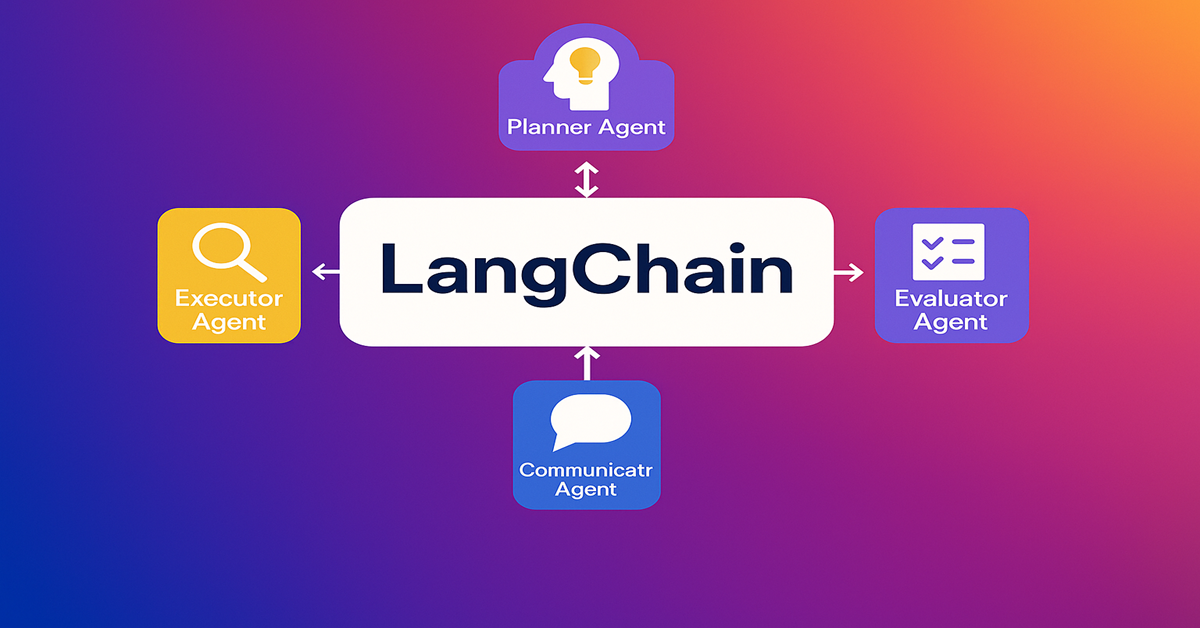
Skill system: The skill module enables autonomous‑agent workflows. Under paid subscription tiers, Claude can run multi‑step background tasks without repeated human prompting.
Cowork: This collaborative tool attempts to connect external third‑party applications. When network connectivity is restricted, users can configure local tool invocations to reduce redundant manual steps.
Claude Tag: It can be embedded inside Slack workspaces. End‑users decide which channels, datasets and code repositories the agent can access.
While feature coverage keeps expanding, Claude still has inherent limitations. It cannot reliably repair every self‑generated code error. Hallucination and factual‑inaccuracy risks persist even on latest‑version checkpoints. When enterprises integrate multi‑model services including Claude through API channels, developers may adopt 4sapi as an API gateway to unify access and abstract backend model differences.
Constitutional‑AI: Anthropic’s Distinct Safety Philosophy
Compared with many competing generative‑AI developers, Anthropic puts heavy emphasis on value alignment and safe interaction, embodied by its well‑known Constitutional‑AI framework. Constitutional‑AI supplies a set of predefined principle‑based guidelines (“constitution”) to steer model output. It references ethical texts including the Universal Declaration of Human Rights.
The mechanism works through two‑phase training. First, the model generates responses; second, it critiques and revises its own output against constitutional rules, mitigating harmful or biased content without heavy‑handed brute‑force filtering. This approach improves transparency for high‑risk domains such as educational scenarios.
Industry analysts also point out realistic constraints of Constitutional‑AI. Self‑correction cannot eliminate all misbehavior. Opus series still requires external monitoring systems for risky prompt inputs. Security engineers need to conduct independent red‑team testing. Constitutional‑AI provides one layer of risk reduction rather than complete safety guarantees.
Watermarking technology is another safety measure Anthropic researches. Invisible markers embedded inside text and images help identify AI‑originated content. Watermarks do not alter readability for human readers. Nevertheless, adversaries can apply simple transformation operations to evade watermark detection.
Anthropic has encountered multiple public‑safety‑related incidents. Misclassification bugs caused erroneous restrictions for Max‑plan subscribers. Another security leak exposed partial source code of Claude Code. The company also reached a 150‑million‑dollar settlement regarding copyright disputes over training‑data sources. These cases illustrate that safety‑architecture design cannot fully eliminate real‑world operational failures.
Subscription Tiers and Commercial Pricing Model
Anthropic offers multiple consumption modes for Claude, covering free‑experience plans, individual paid subscriptions and enterprise contracts.
Free Tier: Zero‑cost access, limited model selection and rate caps. Users can test Sonnet‑series capabilities without payment.
Claude Pro: Monthly subscription costs 20 USD. It relaxes rate‑limits, unlocks Opus‑model access, and activates Project, Cowork and Skill agent functions.
Max Tier: Starts at 100 USD per month. Advanced high‑volume tier reaches 200 USD monthly, targeting heavy‑power individual users.
Enterprise Plans: Custom‑negotiated contracts for organizations. Access controls, SLA guarantees and administrative audit capabilities are available.
In addition to web‑interface subscriptions, Anthropic delivers model access via API. API billing operates on pay‑as‑you‑go token pricing. Function availability differs across consumption channels. Some advanced agent‑oriented capabilities like Cowork are not fully exposed on the API path.
Core Strengths and Real‑World Limitations
Advantages
Long‑context document handling: Claude maintains stable performance processing very long documents, which attracts legal teams, research departments and knowledge‑intensive enterprises.
Systematic safety research: Constitutional‑AI forms a publicly documented alignment system, providing reference for the whole industry.
Rich ecosystem connectors: Pre‑built connectors lower integration overhead for office‑automation scenarios.
Diversified model hierarchy: Light‑weight to high‑power variants allow users to trade off speed, cost and reasoning capacity.
Existing Constraints
Hallucination risk remains present. Even top‑tier Opus may invent facts or misinterpret complex documents.
Native multimedia capacity lags competitors. Real‑time audio‑video generation is not supported.
Agent‑feature maturity is still evolving. Autonomous multi‑step workflows can get stuck or produce unintended side effects.
Cost pressure for heavy‑usage scenarios. Opus‑grade inference brings considerable token expense for large‑scale workloads.
Final Summary
Claude AI represents one of the most competitive large‑model product lines in today’s generative‑AI landscape. Backed by enormous venture capital investment and driven by rapid revenue expansion, Anthropic has built a complete product matrix covering Sonnet, Opus and Fable 5. Its Constitutional‑AI safety mechanism offers a distinguishable technical path for value alignment. Rich document‑processing features and third‑party connectors make it suitable for office automation, research analysis and enterprise knowledge work.
At the same time, users should maintain objective awareness. No safety framework can remove all LLM‑native risks including hallucination, logic defect and agent mis‑execution. Subscription tiers and API channels deliver different capability sets. Teams building production applications must carry out independent validation, risk assessment and human‑review mechanisms regardless of model vendor claims.
International access: https://4sapi.com
Domestic access: https://4sapi.cn